

Equity, Diversity, and Inclusion (EDI) is a core part of ethical, competent practice in engineering and geoscience. This course builds practical awareness and skills to help registrants recognize barriers, reduce bias, and contribute to safer, more respectful workplaces and project environments.
This course explains why EDI matters in day-to-day practice, learn key concepts and terminology, and examine how unconscious bias can shape decisions and outcomes. The course also introduces inclusive behaviours and competencies and provides practical strategies to move from awareness to action.
This training was developed by Engineers Canada with input from the Equity, Diversity, and Inclusion Training Task Force, representing the 30 by 30 Champions network and partner organizations, in collaboration with multiple Canadian engineering and geoscience regulators and Geoscientists Canada.
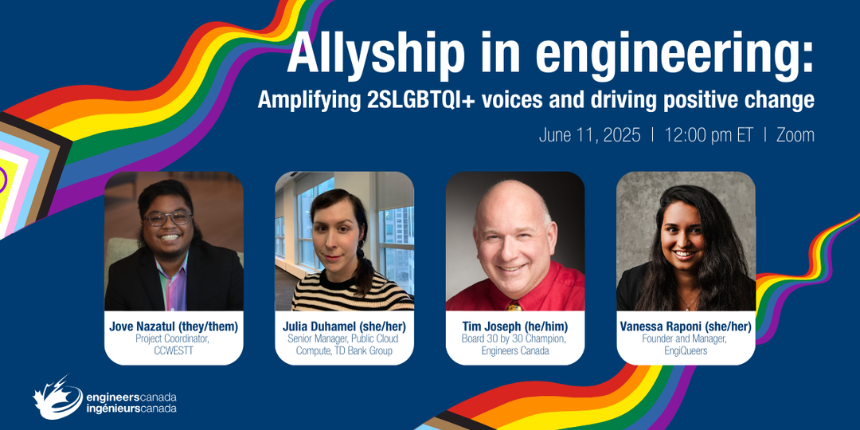
In recognition of Pride Month 2025, this webinar explores what active allyship looks like in engineering and related fields. Professionals from engineering, technology, trades, and finance share insights on how to meaningfully support 2SLGBTQI+ colleagues and build more inclusive workplaces.
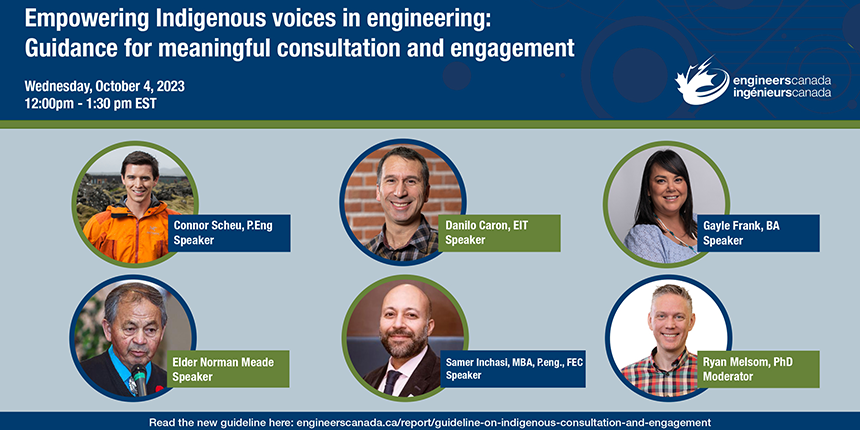
This webinar provides guidance on meaningful consultation and engagement with Indigenous communities in engineering projects. Developed through Indigenous-led collaboration, it emphasizes ethical responsibility, relationship-building, and reconciliation within engineering practices. The session introduces a national guideline produced by Engineers Canada and highlights lived experiences and perspectives from Indigenous engineers, elders, and community leaders.
This webinar introduces the Progressive Aboriginal Relations (PAR) Program, a national certification developed by the Canadian Council for Aboriginal Business (CCAB) to guide organizations in building strong, ethical relationships with Indigenous communities.
Presented by Engineers Canada in partnership with CCAB, the session explores how the PAR framework supports ethical practice through leadership, employment, business development, and community engagement.
Participants will gain insights into how engineering organizations can contribute meaningfully to reconciliation and align with the Truth and Reconciliation Commission’s Calls to Action.
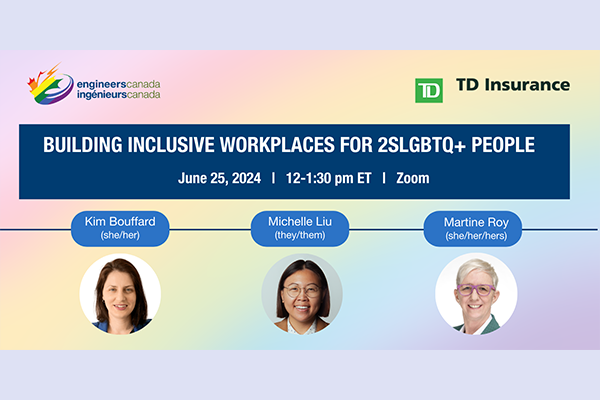
This session explores how to create inclusive and supportive engineering workplaces for 2SLGBTQ+ individuals, focusing on inclusive culture, professional responsibility, and practical strategies for allyship—supporting and advocating for marginalized colleagues.